


No matter the cut, the hallmarks of a well-cooked steak are a crusty exterior (where much of the flavor comes from) and the juicy, tender interior. Planning is key, factoring in the appropriate time needed to season properly and bring the steak to room temperature.
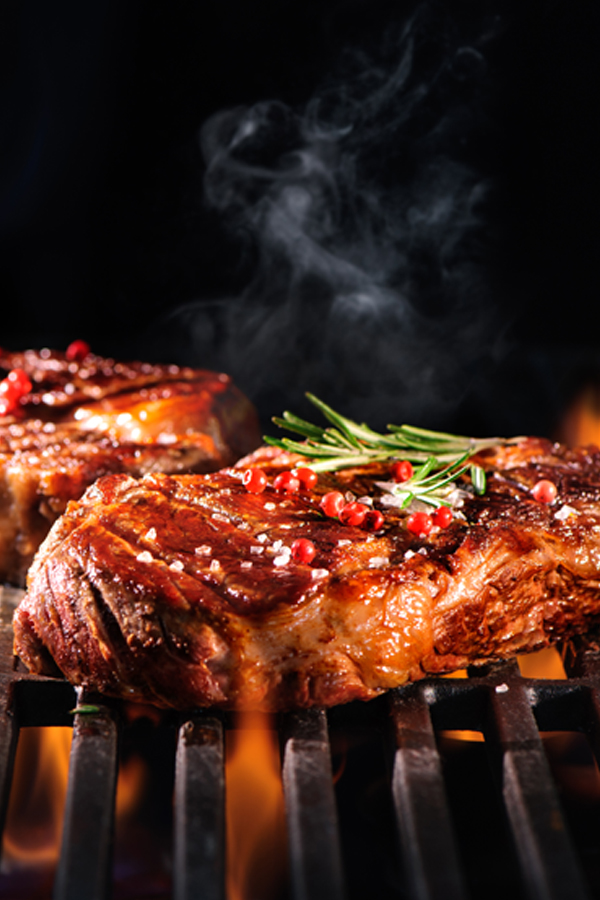
Season the meat with a liberal amount of salt and pepper a few hours before cooking. Experiment with different rubs and marinades to boost flavor. After seasoning, let thinner cuts stand at room temperature for at least 30 minutes and thicker cuts for at least one hour. Make sure the meat is dry by patting it with a paper towel or lightly dusting it with flour; too much moisture will prevent browning.
The cooking method will also determine the steak’s flavor. Grilling will give it a smoky, charred flavor, while stovetop cooking allows you to bathe the steak in butter as it finishes cooking. Either way, cooking at a very high temperature starts the Maillard reaction between the steak’s proteins and natural sugars, which gives seared food a distinctively delicious flavor.
Grilling over charcoal is all about heat management. When the grill is ready, check for hot and cold spots by placing your hands over the grill. With gas or charcoal grills, oil the grates with tongs and a paper towel. After placing steaks on the grill, resist the urge to move them. When the steaks naturally release from the grates after a few minutes, give them a quarter turn to get nice grill marks.
When cooking on the stovetop, heat a cast-iron skillet until piping hot, then add the oil. Make sure it sizzles when the meat hits the pan. If the pan isn’t hot enough, food can stick and steam rather than brown. Add butter and herbs to the pan and baste the steak after it’s flipped. Or, start off on the stove and finish in the oven, a technique called pan roasting, which is especially important when cooking a thick steak. Pop it in a 400° oven on a roasting rack over a baking sheet.
Whether grilling or pan-roasting, use a meat thermometer to ensure the meat is done to your liking. Cook steaks until the internal temperature reaches 130 to 145° for medium-rare to medium, then let the meat rest several minutes to redistribute the juices.